
Fire escapes are designed for one purpose: to provide a safe way out when normal exits are blocked by smoke, fire, or another emergency. But a fire escape can only do its job if it is accessible, structurally sound, and properly maintained.
During Fire Prevention Week, building owners and property managers have a perfect opportunity to take a closer look at their exterior emergency egress systems.
At West Coast Fire Escapes, we recommend using this simple 7 Days – 7 Fire Escape Checks approach to help identify obvious issues before they become larger safety or compliance problems.
Day 1: Check Access to the Fire Escape
Start inside the building.
Make sure windows, doors, hallways, and other access points leading to the fire escape are clear and easy to reach. Furniture, storage boxes, equipment, security devices, or other objects should never prevent occupants from reaching an emergency exit.
A structurally sound fire escape is not useful if people cannot access it quickly during an emergency.
Day 2: Inspect Platforms and Landings
Take a close look at fire escape platforms and landings.
Watch for visible corrosion, loose sections, damaged steel, holes, severe rust, or other deterioration. Platforms should feel stable and should not contain unnecessary objects or storage that could interfere with evacuation.
These areas may need to support multiple occupants during an emergency, making structural condition especially important.
Day 3: Examine Stairs and Treads
Fire escape stairs and individual treads experience years of exposure to rain, moisture, heat, and changing temperatures.
Look for:
- Loose or damaged stair treads
- Excessive rust or corrosion
- Bent or missing components
- Cracks or damaged welds
- Areas that appear unstable
Even one damaged tread can create a serious hazard during an evacuation.
Day 4: Check Railings and Guardrails
Railings help prevent falls while occupants move down the fire escape.
Check for loose railings, missing sections, severe corrosion, damaged connections, or movement when pressure is applied.
Railings should remain securely attached and provide dependable support along stairs, balconies, and platforms.
Day 5: Look at Anchors, Connections, and Attachment Points
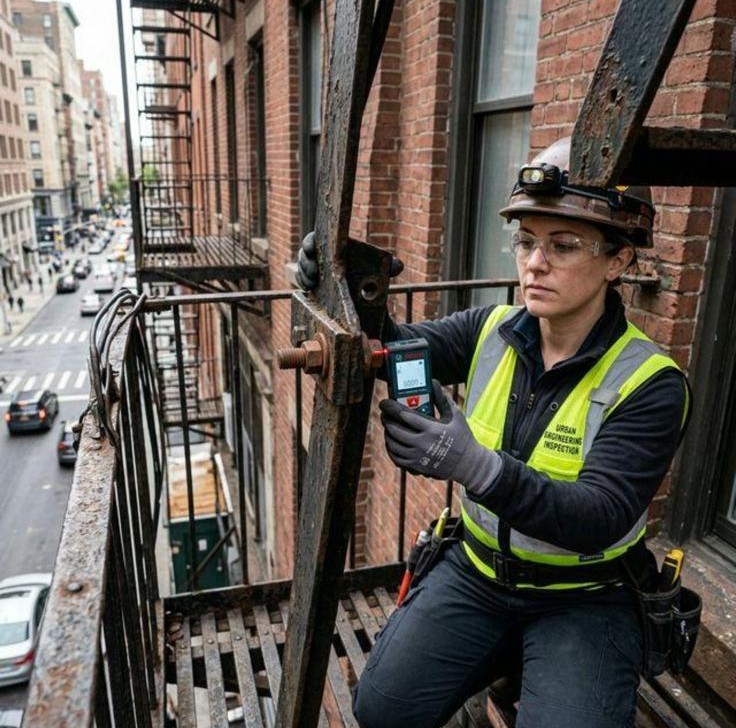
A fire escape depends on much more than the steel you can easily see.
Connections, brackets, anchors, bolts, and attachment points secure the system to the building. Corrosion or deterioration around these locations can affect the structural integrity of the entire fire escape.
These areas should be evaluated carefully during a professional fire escape inspection.
Day 6: Look for Rust and Deteriorating Coatings
Surface rust may appear cosmetic, but untreated corrosion can eventually damage structural steel.
Look for peeling paint, exposed metal, heavy rust, flaking steel, and areas where water repeatedly collects.
Proper surface preparation and protective coatings can help slow corrosion and extend the service life of a fire escape.
Painting over serious rust without first evaluating and repairing the underlying deterioration is not a proper solution.
Day 7: Test the Drop Ladder
The final check is one of the most important: the drop ladder.
A fire escape ladder that has not moved in years may not operate when someone actually needs it.
Drop ladders and moving components should remain functional and free of obstructions. Cables, guides, hinges, release mechanisms, and other moving parts may also require inspection and maintenance.
Never wait for an emergency to discover that the ladder is stuck.
A Fire Escape Is a Life-Safety System
Fire escapes often spend decades exposed to weather while receiving very little attention. Because they may rarely be used, problems can go unnoticed for years.
That is why regular inspections and maintenance matter.
These seven visual checks can help property owners recognize potential problems, but they are not a substitute for a professional fire escape inspection, structural evaluation, certification, or load testing when required.
West Coast Fire Escapes provides professional fire escape services throughout California, including:
- Fire escape inspections
- Maintenance
- Structural repairs
- Welding and component replacement
- Rust removal and restoration
- Painting and protective coatings
- Load testing
- Fire escape certification
This Fire Prevention Week, take a few minutes to look at your building’s secondary means of egress.
Don’t wait for an emergency to find out whether your fire escape works.
For professional fire escape inspection, maintenance, repair, restoration, certification, or load-testing services, contact West Coast Fire Escapes.