

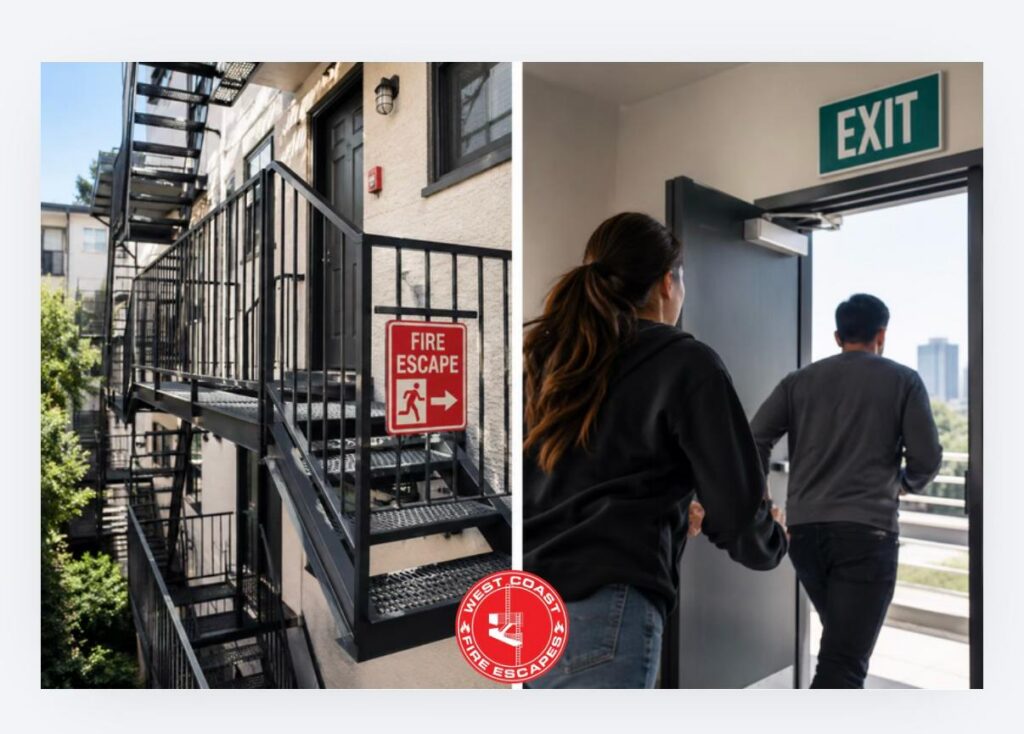
Fire escapes are essential safety features in multi-family residential buildings, providing an alternative exit during emergencies. Building owners, property managers, and residents all play a role in ensuring these routes remain safe and accessible.
- Keep Fire Escapes Clear
Never use fire escapes, stairs, or landings for storage. Bicycles, furniture, and other obstructions can delay evacuation during an emergency.
- Recognize Potential Hazards
Rust, loose railings, damaged stairs, and weakened connections can compromise safety. Report visible damage or structural concerns to building management promptly.
- Ensure Easy Access
Doors and windows leading to fire escapes should function properly and remain accessible. Report stuck windows, faulty doors, or barriers that could prevent a quick exit.
- Educate Residents
Ensure residents understand the building’s evacuation plan and know their designated exits. Emergency planning should also consider children, older adults, and people who may need additional assistance.
- Know What to Do in an Emergency
Follow the building’s evacuation plan and emergency responders’ instructions. If a fire escape is blocked or unsafe, avoid entering a dangerous area, call 911, and follow the dispatcher’s guidance.
Make Fire Safety a Priority
Fire escape safety starts with awareness and preparation. Keeping escape routes unobstructed, recognizing hazards, and helping residents understand emergency procedures can contribute to a safer living environment.
Don’t wait until an emergency to prepare. A clear escape route and a well-understood safety plan can make a critical difference when seconds count.