
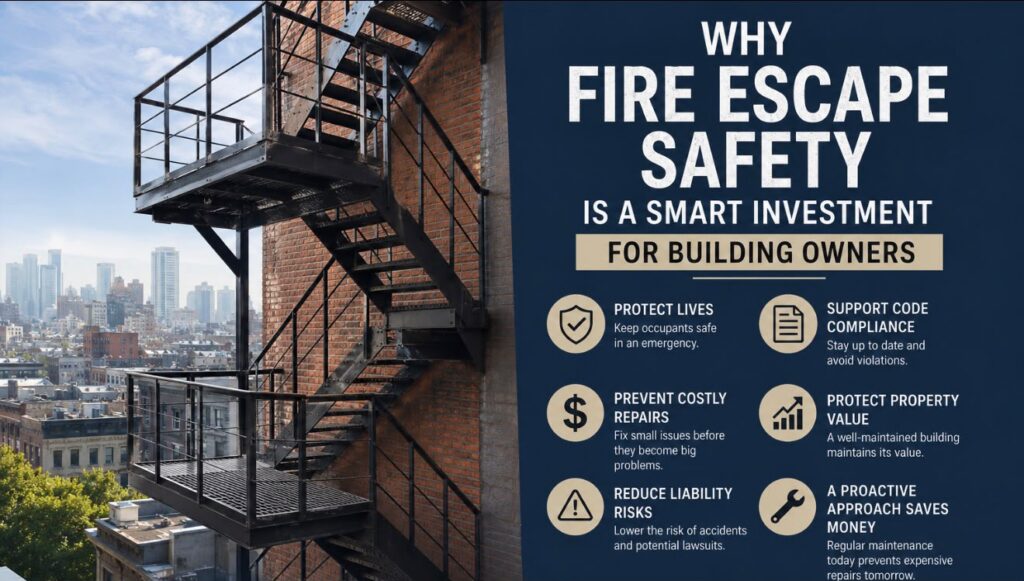
For building owners, maintaining a safe property is about more than meeting basic requirements—it’s about protecting people, preserving the value of the building, and avoiding costly problems down the road. Fire escapes are an important part of a building’s emergency egress system, and keeping them properly inspected and maintained is a smart investment.
Protecting Lives When It Matters Most
A fire escape may sit unused for months or even years, but during an emergency, it can become a critical means of getting occupants to safety. rust, corrosion, loose connections, damaged stairs, or weakened structural components can create serious hazards when people need to use the escape quickly.
Routine inspections, maintenance, and structural testing can help identify potential problems before they become dangerous.
Preventing Expensive Repairs
Small issues can become major repairs when they are ignored. Surface rust, deteriorating paint, loose bolts, or minor corrosion may be relatively simple to address when discovered early. Left untreated, however, deterioration can compromise structural components and lead to significantly more expensive restoration or replacement.
Investing in regular maintenance allows building owners to address problems proactively rather than waiting for an emergency or major structural failure.
Supporting Code Compliance
Fire escape requirements can vary depending on the building, location, and applicable regulations. Building owners are responsible for keeping their properties in a safe and compliant condition.
Regular inspections and proper documentation can help owners identify deficiencies and stay ahead of required maintenance. Working with qualified professionals can also provide valuable guidance when repairs, load testing, painting, or certifications are needed.
Protecting Property Value
A well-maintained fire escape is part of a well-maintained building. Visible corrosion, peeling coatings, damaged stairs, or neglected structural components can make a property appear poorly maintained and may contribute to larger concerns during inspections or property evaluations.
Keeping fire escapes in good condition helps preserve the overall appearance, functionality, and long-term value of the property.
Reducing Liability Risks
Building owners have a responsibility to provide safe premises for occupants, employees, visitors, and other individuals who may be on the property. Neglecting a known fire escape problem can increase liability exposure if an accident occurs.
Regular inspections and documented maintenance demonstrate a proactive approach to safety. While no maintenance program can eliminate every risk, identifying and correcting hazards early can significantly reduce preventable problems.
A Proactive Approach Saves Money
The best time to address a fire escape problem is before it becomes an emergency. A proactive maintenance program can include:
• Routine visual inspections
• Structural inspections and load testing when required
• Rust and corrosion treatment
• Repairs to damaged or deteriorated components
• Protective painting and coatings
• Replacement of compromised hardware or structural elements
• Proper documentation and certifications
These services work together to keep fire escapes functional, safe, and ready when they are needed most.
Fire Escape Safety Is an Investment, Not an Expense
For building owners, fire escape maintenance should be viewed as part of responsible property management. Investing in inspections and preventative maintenance can help protect occupants, reduce unexpected repair costs, support compliance, preserve property value, and provide greater peace of mind.
A fire escape might not be used every day—but if an emergency occurs, it needs to work exactly as intended.
Don’t wait until a small problem becomes a major one. Regular fire escape inspections, maintenance, repairs, and testing can help keep your building—and the people inside it—safer for years to come.