

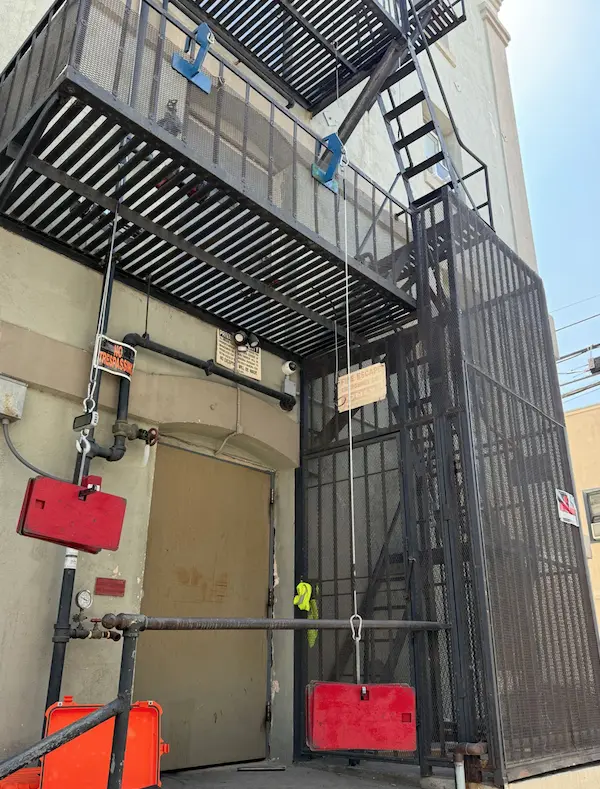
What is a Load Test?
A Fire Escape Load Test is a structural safety test performed on exterior fire escapes (usually metal stairways or ladders attached to buildings) to verify that they can safely support the loads required by building and fire codes.
Here’s a breakdown:
Purpose
- Fire escapes are often decades old, exposed to weather, rust, and deterioration.
- The test ensures the escape can safely carry the weight of people during an emergency evacuation.
- It’s usually required by local building codes, fire departments, or insurance companies.
How It’s Done
- Load Application – A specified weight (often water barrels, sandbags, or hydraulic equipment) is applied to different parts of the fire escape.
- Testing Standard – The typical requirement is 100 pounds per square foot (psf) or sometimes 1.5 times the anticipated live load, depending on jurisdiction.
- Inspection – An engineer or licensed professional watches for structural movement, deflection, loose connections, corrosion, or weld failure.
- Certification – If it passes, the fire escape is “load tested” and certified safe for a certain number of years (commonly 5 years).
Alternatives
In some places, instead of a physical load test, a structural evaluation and repair certification by a licensed engineer may be accepted.
👉 In short: A Fire Escape Load Test is a proof test of strength and safety for old fire escapes, ensuring they won’t collapse when needed in an emergency.