

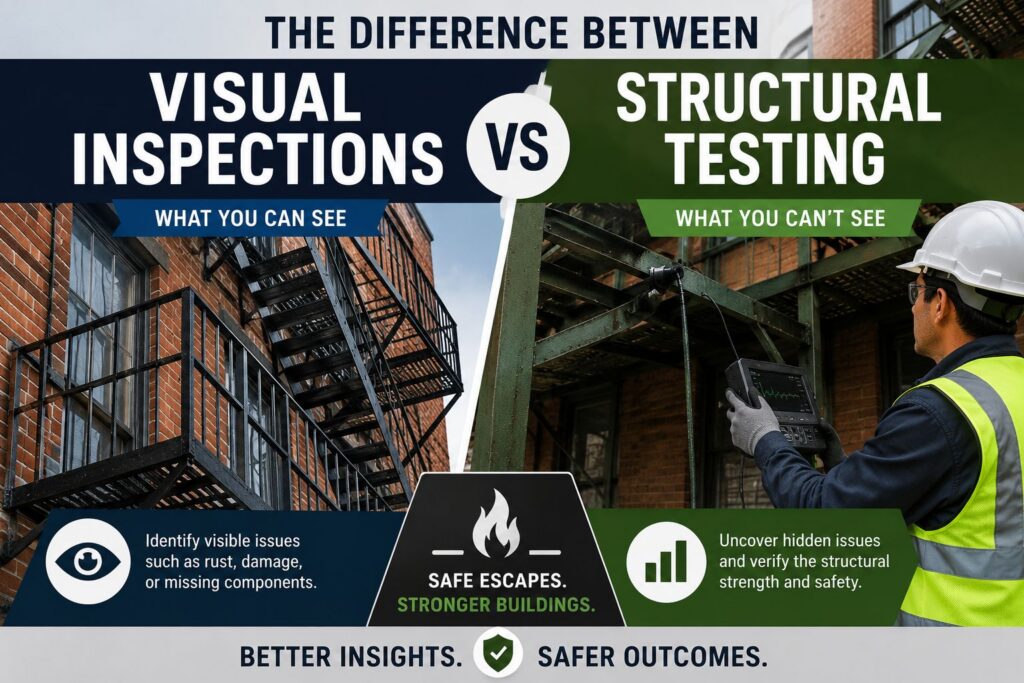
The Difference Between Visual Inspections and Structural Testing for Fire Escapes
Fire escapes play a critical role in protecting lives during emergencies. Whether you’re a property owner, building manager, or facilities professional, ensuring your fire escape is safe and compliant should be a top priority.
Two of the most important evaluation methods are visual inspections and structural testing. While both contribute to fire escape safety, they serve different purposes and provide different levels of insight into a structure’s condition.
What Is a Fire Escape Visual Inspection?
A fire escape visual inspection is a thorough examination of the visible components of a fire escape system. Trained inspectors assess the structure for signs of deterioration, damage, or non-compliance.
Common issues identified during a visual inspection include:
- Rust and corrosion
- Loose or missing bolts
- Damaged railings
- Cracked welds
- Bent or warped components
- Blocked access points
- General wear and weather-related damage
Visual inspections are an effective way to identify obvious safety concerns and maintenance needs before they become larger problems.
Benefits of Visual Inspections
- Cost-effective assessment method
- Identifies visible hazards quickly
- Supports routine maintenance planning
- Helps maintain fire escape compliance
- Extends the lifespan of the structure
However, visual inspections can only evaluate what is visible on the surface.
What Is Fire Escape Structural Testing?
Structural testing goes beyond what the eye can see. It evaluates the actual strength, stability, and load-bearing capacity of a fire escape.
Using specialized testing methods and equipment, inspectors can determine whether the structure can safely withstand the loads it was designed to support.
Structural testing may reveal:
- Hidden corrosion
- Internal metal deterioration
- Weak welds or connections
- Load-bearing deficiencies
- Material fatigue
- Structural weaknesses not visible during inspections
This process provides a deeper understanding of the fire escape’s overall condition and safety.
Benefits of Structural Testing
- Verifies structural integrity
- Detects hidden defects
- Confirms load capacity
- Improves occupant safety
- Supports regulatory compliance
- Reduces liability risks
Visual Inspections vs. Structural Testing: What’s the Difference?
The primary difference lies in the depth of evaluation.
Visual Inspection Structural Testing
Examines visible conditions Evaluates structural performance
Identifies surface-level issues Detects hidden weaknesses
Faster and less invasive More comprehensive analysis
Supports routine maintenance Verifies long-term safety
Focuses on what can be seen Focuses on what cannot be seen
Both methods are valuable, but neither should be viewed as a complete replacement for the other.
Why Both Are Necessary
A fire escape may appear safe during a visual inspection while concealing significant structural deterioration. Likewise, visible issues may indicate the need for more extensive testing.
Combining routine visual inspections with periodic structural testing provides:
- Greater confidence in safety
- Improved compliance with local regulations
- Early detection of costly repairs
- Longer service life for the structure
- Enhanced emergency preparedness
Protecting Lives Through Proper Fire Escape Evaluation
Fire escapes are life-safety systems that must remain reliable under emergency conditions. Visual inspections help identify visible concerns, while structural testing confirms that the structure can perform as intended when lives depend on it.
By incorporating both inspection methods into a comprehensive maintenance program, building owners can improve safety, maintain compliance, and protect their investment for years to come.
Call to Action
Need professional fire escape inspections or structural testing services? Contact a qualified fire escape specialist to ensure your building remains safe, compliant, and ready when it matters most