
Fire escapes are a critical life safety feature designed to provide occupants with a safe means of egress during an emergency. However, exposure to the elements, aging materials, and deferred maintenance can lead to serious code violations that put both people and property at risk.
Whether you own a commercial, residential, or historic building, understanding the most common fire escape code violations in California can help you stay compliant, avoid costly repairs, and ensure your fire escape is ready to perform when it matters most.
1. Rust and Corrosion
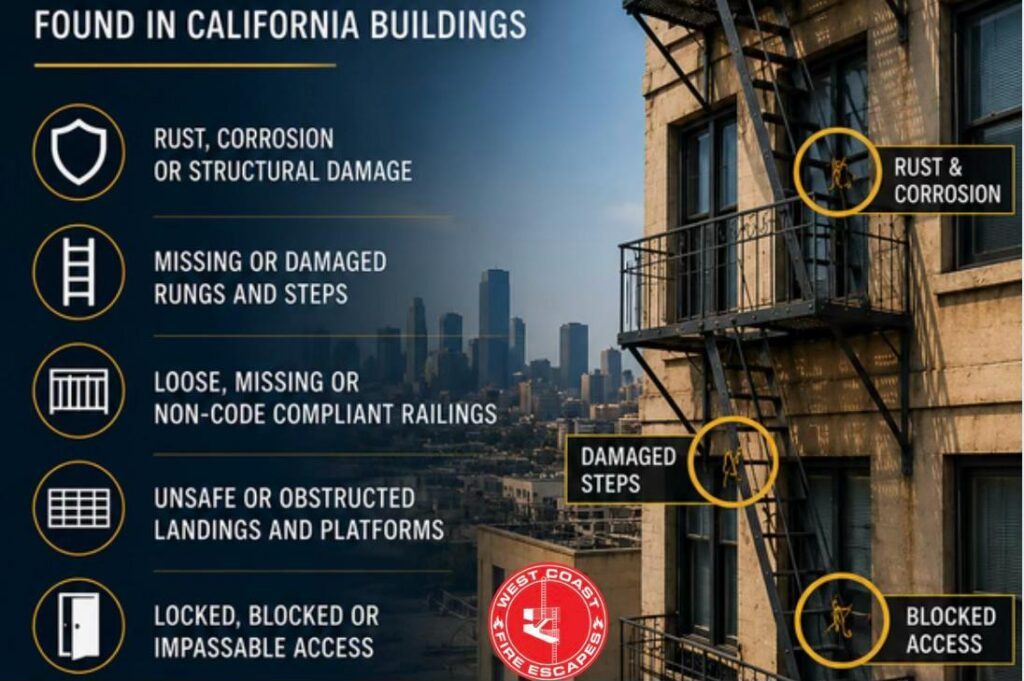
Rust is one of the most common issues found during California fire escape inspections. While minor surface rust may seem harmless, untreated corrosion can weaken steel components, compromise welds, and reduce the structural integrity of the entire fire escape.
Routine inspections and maintenance can identify corrosion early before it becomes a major safety concern.
2. Damaged Structural Components
Fire escapes are subjected to decades of weather exposure and daily wear. During a fire escape inspection, common structural deficiencies include:
• Cracked or failed welds
• Loose or missing bolts
• Bent stair treads or platforms
• Damaged support brackets
• Deteriorated connections
Any damaged structural component can affect the fire escape’s ability to safely support occupants during an emergency.
3. Obstructed Fire Escape Access
A fire escape is only effective if it can be accessed quickly. One of the most frequently cited violations is blocked access caused by:
• Stored equipment or furniture
• Locked exit doors
• Trash or debris
• Overgrown landscaping
• Obstructions at the ground-level exit
Keeping fire escape pathways clear is essential for emergency evacuation and code compliance.
4. Missing or Unsafe Safety Features
Guardrails, handrails, ladders, platforms, and protective barriers are all designed to keep occupants safe while exiting a building.
Missing, loose, or deteriorated safety features are common violations that should be repaired immediately to reduce liability and improve occupant safety.
5. Failure to Complete Required Fire Escape Inspections and Load Testing
Many California municipalities require periodic fire escape inspections, and some jurisdictions also require fire escape load testing and engineering certifications to verify structural integrity.
Skipping required inspections may allow hidden structural deficiencies to go unnoticed, increasing the risk of failure during an emergency and potentially leading to code enforcement actions.
6. Improper Repairs or Unauthorized Modifications
Not all repairs are created equal. Welding, component replacement, or structural modifications performed without proper engineering oversight or code compliance can create new safety hazards.
Fire escape repairs should always be completed by experienced professionals who understand California building codes and applicable local requirements.
Why Fire Escape Compliance Matters
Fire escape code compliance isn’t just about meeting regulations—it’s about protecting lives.
Routine fire escape inspections, preventative maintenance, and timely repairs help:
• Improve occupant safety
• Extend the lifespan of the fire escape
• Reduce long-term repair costs
• Identify structural issues before they become major problems
• Maintain compliance with California and local building requirements
A fire escape may appear safe from the ground, but hidden deterioration can only be identified through a thorough inspection performed by qualified professionals.
Schedule Your California Fire Escape Inspection
If your building’s fire escape hasn’t been inspected recently, now is the time to act.
Professional California fire escape inspections, load testing, fire escape repairs, painting, and engineering certifications help ensure your fire escape remains safe, compliant, and ready to perform when it’s needed most.
Protect your building, your investment, and the people who rely on it by making fire escape safety a priority