

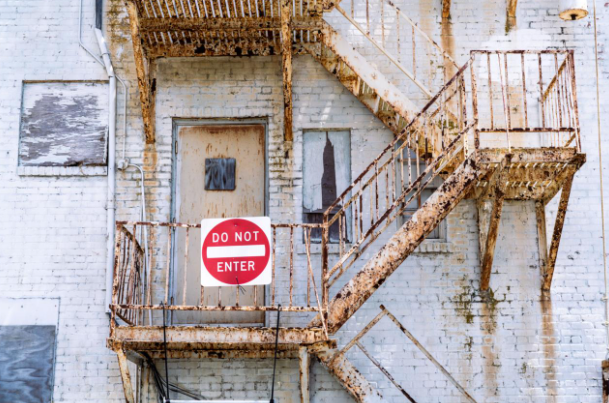
Fire escapes are often overlooked—until the moment they’re needed most. Mounted on the exterior of buildings, exposed to rain, sun, and pollution, these structures quietly endure years of wear and tear. Among the most serious threats they face is rust. While it may seem like a cosmetic issue at first, rust can turn a life-saving structure into a deadly hazard.
1. Rust Weakens Structural Integrity
Rust is more than just surface damage—it’s a form of corrosion that eats away at metal. Over time, this process reduces the thickness and strength of the steel components that support a fire escape. Steps can become brittle, railings can loosen, and support beams can fail under pressure. In an emergency situation where multiple people may rely on the fire escape at once, even minor weakening can lead to catastrophic collapse.
2. Increased Risk During Emergencies
Fire escapes are designed for quick, safe evacuation. But when rust is present, they become unpredictable. A stair tread could give way, a landing might not support weight, or a railing could break when someone grabs it for balance. In high-stress situations like fires, there’s no time to test whether a structure is safe—people must trust it completely.
3. Legal and Compliance Issues
Building owners are responsible for maintaining safe egress systems. Local fire codes and safety regulations often require routine inspections and maintenance of fire escapes. If a rusted fire escape results in injury or death, property owners can face serious legal consequences, including fines, lawsuits, and even criminal liability.
4. Accelerated Deterioration Over Time
Rust doesn’t stay still—it spreads. Once it begins, especially in outdoor environments, it accelerates quickly. Moisture gets trapped in cracks and joints, worsening the corrosion cycle. Without intervention, what starts as minor rust spots can evolve into serious structural damage in a relatively short time.
5. Costly Repairs vs. Preventive Maintenance
Addressing rust early is far more cost-effective than replacing an entire fire escape system. Routine maintenance—like cleaning, repainting with anti-corrosion coatings, and tightening bolts—can significantly extend the life of the structure. Neglect, on the other hand, often leads to expensive overhauls or complete replacement.
Best Practices for Fire Escape Maintenance
- Regular inspections (at least annually, or as required by local code)
- Immediate treatment of rust spots with sanding and protective coatings
- Professional structural assessments for older systems
- Weatherproof paint and sealants to prevent moisture penetration
Final Thoughts
A fire escape is not just another part of a building—it’s a critical safety system that people depend on in life-or-death situations. Allowing it to rust is more than neglect; it’s a risk to human life. By prioritizing regular maintenance and addressing corrosion early, property owners can ensure their fire escapes remain strong, reliable, and ready when they’re needed most.